Food & Supply Rotation
Most people who stockpile food do it wrong. They buy a bunch of canned goods, shove them in a closet, and forget about them until everything's expired. That's not preparedness — that's an expensive donation to your trash can. Today you'll learn how to use AI to build a real food storage plan that stays fresh, stays balanced, and stays within your budget.
The key insight: food storage isn't a one-time purchase. It's a rotating system where you eat what you store and replace what you eat. AI is exceptionally good at managing this kind of ongoing logistics.
Understanding shelf life by food type
Not all stored food is created equal. Here's what you're working with:
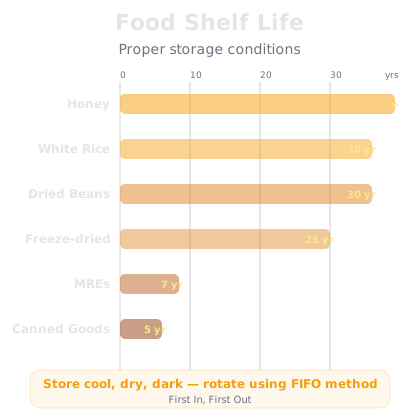
Freeze-dried foods — 25+ years shelf life when sealed. Lightweight, nutritious, but expensive upfront. Think of these as your deep reserve — the food you hope you never need but will be grateful to have.
White rice and dried beans — Up to 30 years if stored properly in Mylar bags with oxygen absorbers. Cheap, calorie-dense, and the backbone of any serious food storage plan. A 50-pound bag of rice runs about $25 and delivers roughly 80,000 calories.
Canned goods — 3 to 5 years realistically. The USDA says longer, but quality drops. These are your rotation staples — buy what you already eat, use the oldest first, replace as you go.
Dry pasta, oats, and powdered milk — 8 to 10 years in proper storage. Good middle ground between cost and longevity.
The smart move is layering all four categories. Canned goods for daily rotation, rice and beans for the foundation, pasta and oats for variety, freeze-dried for the long haul.
Calorie math that actually matters
In a crisis, you're burning more calories than normal. Stress, physical labor, irregular sleep — your body demands more fuel. Plan for a minimum of 2,000 calories per person per day, and bump that to 2,500 if you expect any kind of physical exertion like chopping wood, walking distances, or fortifying your home.
Here's where most people fail: they hit the calorie number but ignore nutritional balance. You can't live on white rice alone. You need protein, fats, vitamins, and fiber. AI is perfect for this — give it your calorie targets and ask it to build a nutritionally balanced plan across your storage categories.
Don't forget the psychological side either. In a stressful situation, comfort food matters more than you'd think. A jar of peanut butter, some hot cocoa mix, or hard candy can be a genuine morale booster. Ask AI to factor in comfort items alongside the survival staples.
Building a rotation schedule
The first-in-first-out (FIFO) system is simple but powerful. Everything you buy goes to the back of the shelf. Everything you eat comes from the front. AI can help you build a rotation calendar that tells you exactly when each item was purchased, when it expires, and when you need to replace it.
Ask AI to generate a spreadsheet template with columns for item name, purchase date, expiration date, quantity, calories per serving, and location. Then ask it to sort by expiration date so you always know what needs to be consumed next.
The real trick is integrating storage food into your regular meals. If you store canned chili, eat canned chili once a month. If you store rice, cook rice weekly. This way nothing expires, you always know your food tastes fine, and restocking becomes part of your normal grocery run — not a separate prepping expense.