Why Preppers Need AI Now
You've got gear. You've got a plan — maybe. You've got a shelf full of canned goods and a binder you haven't updated since last spring. But here's the honest question: are you actually prepared, or are you just busy preparing?
Most prepping is information work. Tracking inventory. Researching threats. Comparing gear. Planning routes. Calculating caloric needs. Building checklists. That's not survival — that's project management. And AI is the best project manager you've never hired.
Prepping is an information problem
Think about what you actually spend time on as a prepper. It's not bushcraft and marksmanship — it's logistics:
Inventory management — What do you have? What's expiring? What's missing? Multiply that across food, water, medical, tools, communications, and documents.
Research — Which water filter handles viruses? What's the shelf life of amoxicillin? How much firewood does a family of four need per winter month? Every answer leads to three more questions.
Planning — Bug-out routes, communication plans, financial contingencies, meeting points, load-out lists. Each one takes hours to build properly.
Scenario analysis — What if the grid goes down for 72 hours? Two weeks? Three months? Each timeframe requires completely different preparation.
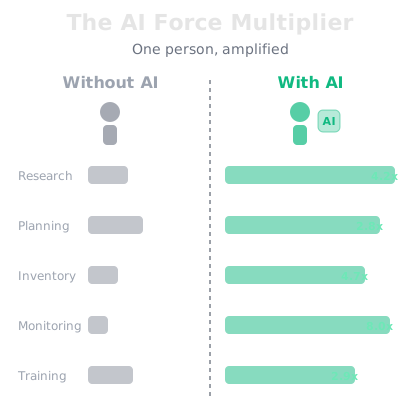
You're one person (or one family) trying to do the work of an entire logistics department. AI is the force multiplier that closes that gap.
The prepper without AI vs. the prepper with AI
Without AI: You spend a Saturday afternoon researching the best water purification options. You read six blog posts, three Reddit threads, and two YouTube reviews. After four hours, you're still not sure which filter to buy because everyone disagrees. Your inventory spreadsheet is three months out of date. Your bug-out bag list is a note on your phone you keep meaning to organize.
With AI: You describe your situation to an AI — family size, region, water sources, budget — and get a prioritized comparison of purification methods in two minutes. You paste your messy inventory notes and get a clean, categorized spreadsheet with expiry tracking. You ask for a bug-out bag checklist optimized for your climate, terrain, and family needs. Total time: 30 minutes. And you spend the rest of that Saturday actually doing hands-on prep.
AI doesn't replace your skills or judgment. It replaces the hours of research and organization that keep you from building real capability.
What this course will teach you
Over the next 14 days, you'll build an AI-powered preparedness system — one practical skill at a time:
Threat assessment — Identify and prioritize the actual risks for your specific location and situation.
Inventory and supplies — Build smart tracking systems for food, water, medical, and gear with rotation alerts.
Water and food planning — Calculate exactly what your household needs and how to source, store, and rotate it.
Communications and security — Plan for when the grid goes down and normal channels stop working.
Financial and document preparedness — Protect the non-physical assets that matter just as much as your stockpile.
Every lesson gives you prompts, frameworks, and workflows you can use immediately. No theory. No fluff. Just practical AI skills that make you harder to kill.