A 5-Minute History of AI
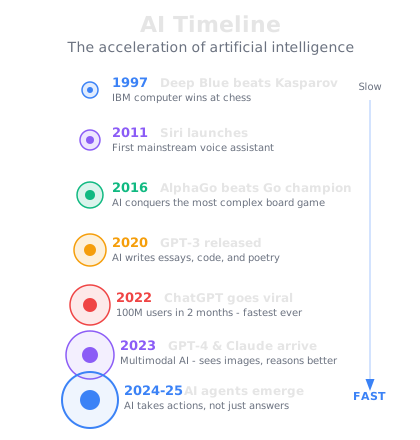
The idea of AI is not new. In 1950, a mathematician named Alan Turing asked a simple question: can machines think? That kicked off decades of research. By 1997, IBM's Deep Blue beat world chess champion Garry Kasparov. It was a huge deal at the time -- but Deep Blue could only play chess. It could not hold a conversation or recognize a photo.
The real breakthrough came from deep learning, a technique inspired by how the human brain works. In 2012, a neural network crushed the competition in an image recognition contest, and suddenly everyone in tech paid attention. Google, Facebook, and others poured billions into AI research. By 2016, Google's AlphaGo beat the world champion at Go -- a game so complex that brute-force computation could not solve it. The AI had to develop something that looked like intuition.
Then came the transformer. In 2017, Google researchers published a paper called "Attention Is All You Need," and it changed everything. Transformers are the architecture behind ChatGPT, Claude, Gemini, and basically every major AI model you use today. OpenAI launched ChatGPT in November 2022, and it hit 100 million users in two months -- the fastest-growing app in history. What took 70 years of research suddenly became something any person with a phone could use. You are living through the most important technology shift since the internet itself.